

You tell your child they have a dental appointment coming up, and suddenly, the questions begin. “Do I have to go?” “What are they going to do?” “Will it hurt?” Before you know it, a simple trip to the dentist has become something your child is already worried about, and you’re wondering how to make the day a little easier.
If you’ve been through this before, you probably know how challenging dental visits can sometimes feel for young children. New faces, unfamiliar sounds, and not knowing what comes next may make even a routine appointment feel overwhelming.
But imagine if your child could leave the dentist feeling curious about what they learned, excited to show you how well they can brush, or simply a little more comfortable about coming back.
While every child’s experience is different, a few thoughtful steps before, during, and after an appointment may help create a more positive dental experience. And with approaches like guided biofilm therapy, children may even get to see what happens during their cleaning in a way that’s easier to understand.
Prepare Your Child for Their Dental Visit Before the Big Day
Think about the last time your child tried something completely new. Maybe it was their first swimming lesson or their first day at school. Even when something sounds fun, not knowing what to expect may bring a few nerves. A dental appointment may feel the same way.
For parents preparing their children for pediatric dental visits, one of the simplest things to try is talking about the appointment before the day arrives. Explain what the dentist does, why taking care of their teeth matters, and what they might see during their visit. You don’t need to go into too much detail. Sometimes, a simple conversation while brushing teeth before bed may be enough to get things started.
You could say something like, “The dental team is going to look at your teeth and help us learn how to keep them clean.”
If your child enjoys playing pretend, you could also turn the idea into a little game. Grab a stuffed animal, let your child pretend to be the dentist, and take turns counting its teeth. You might even read a children’s book about visiting the dentist together.
The goal is to make the experience feel a little more familiar before your child walks through the clinic doors. And if they have questions, give them room to ask. Listening to their concerns without making promises about how the appointment will feel may help them approach the visit with more confidence.
A Calmer Morning May Make the Dental Visit Feel Easier
Picture two different mornings. In the first, everyone is rushing to get ready, shoes are missing, and you’re reminding your child to hurry because you’re going to be late. In the second, there’s enough time to get dressed, enjoy breakfast if appropriate, and leave the house without feeling rushed.
Which morning would you rather have before a dental appointment?
Children may pick up on the stress around them, which is why a calmer morning could help set a better tone for the visit. Of course, family schedules don’t always go perfectly, but planning a little extra time may make the day feel less overwhelming.
Another idea is to give your child a few small choices. Maybe they want to bring their favorite stuffed animal, choose the music for the drive, or wear the sweater they feel most comfortable in.
These might seem like little things, but having a say in part of the day may help children feel more involved.
You could also talk about something enjoyable you’ll do together afterward, like visiting the park or spending time with a favorite book. This gives your child something familiar to look forward to without making the dental appointment seem like something they need to endure to earn a reward.
What If Your Child Could Actually See Where They Missed Brushing?
You’ve probably had this conversation at home more than once. “Did you brush your teeth?” “Yes!” “Did you get the ones in the back?” “Yes!” But when you take a closer look, you’re not entirely convinced.
For young children, brushing properly takes practice. They may move their toothbrush around for a little while and assume every tooth is clean. The tricky part is that plaque, a sticky buildup on teeth, isn’t always easy to notice just by looking in the mirror.
So, how do you help your child understand where they need to brush better without turning it into another daily reminder? This is where guided biofilm therapy may make dental cleanings more interesting.
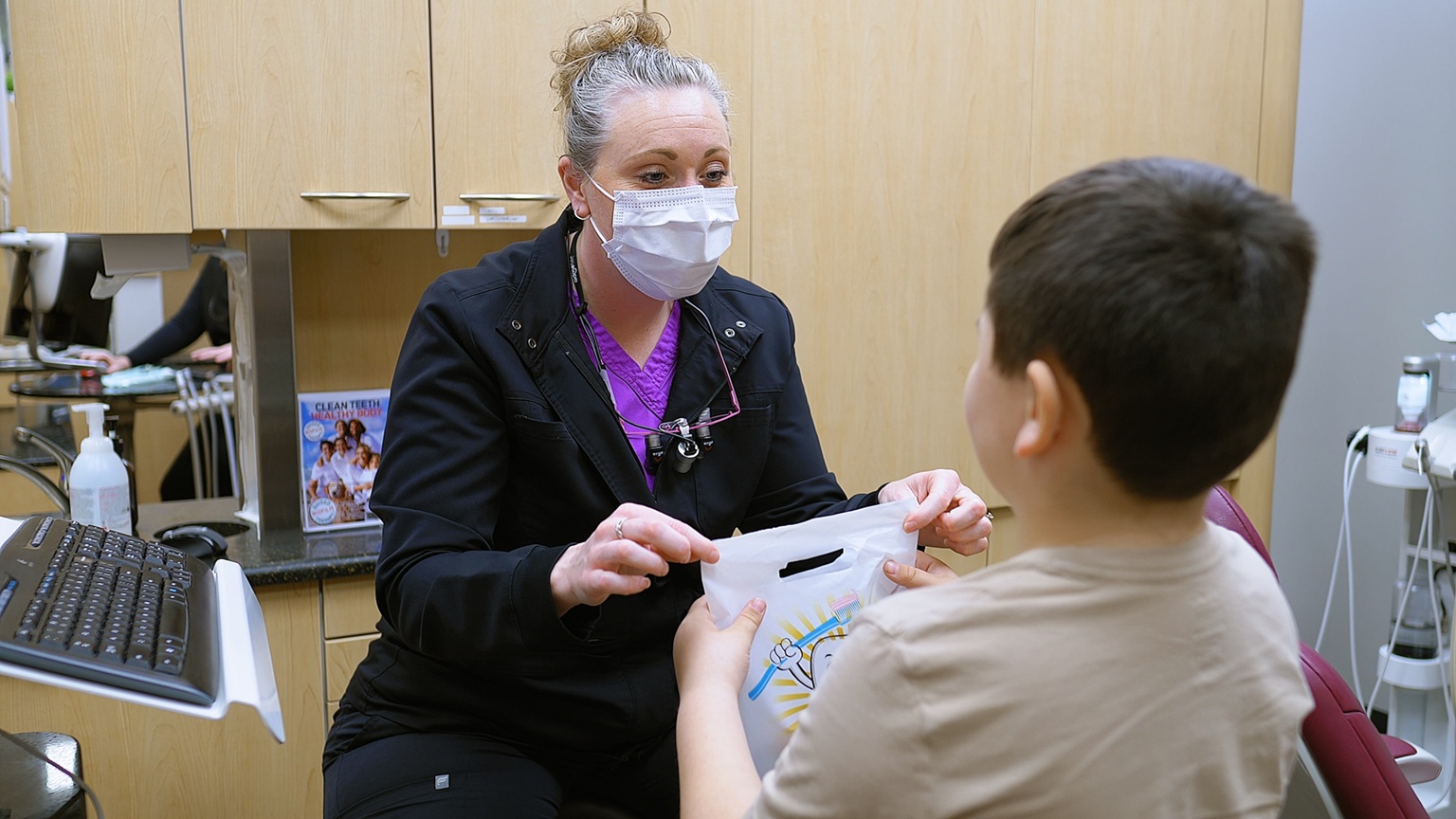
At North Stony Dental, we use a special disclosing solution as part of our dental care approach in Stony Plain. This solution highlights plaque buildup on the teeth, giving children an opportunity to see the areas they may have missed while brushing.
Imagine your child looking at their teeth and discovering that the back teeth they’ve been brushing so carefully still need a little extra attention. That moment may help them understand something that is difficult to explain in words alone.
Our goal isn’t to make children feel bad about missing a spot. We want to give them a clearer picture of their brushing habits and help them recognize where they may need to focus next time.
And for parents who have spent countless evenings reminding their children to brush more carefully, that visual lesson could be a helpful part of the conversation at home.
Guided Biofilm Therapy: A Gentler Approach to Children’s Dental Cleanings
For some children, the cleaning itself may be the part of a dental appointment that makes them nervous. They might wonder what the dental team is using, what it will feel like, or how long everything might take.
And when you’re a parent, seeing your child feeling unsure may make you wish there were a way to help them feel more at ease.
At North Stony Dental, we use guided biofilm therapy to offer a gentler, more interactive approach to dental cleanings. After we apply the special solution to highlight plaque, our team uses warm water and air polishing to gently remove the buildup.
This method may provide a more comfortable cleaning experience for some children, depending on their individual needs and sensitivity. But there’s another part of this approach worth thinking about.
When children can see the plaque on their teeth before we remove it, the cleaning may become more than just something that happens while they sit in the chair. We want to give children an opportunity to connect what they’ve seen with the importance of keeping their teeth clean.
Rather than simply being told to brush better, they may begin to understand why certain areas need more attention.
Of course, every child responds differently to dental care. Some may feel comfortable with the process right away, while others may need more time or reassurance. That’s why we encourage parents to speak with our team about their child’s individual needs, especially if their child has felt uncomfortable during previous visits.
Help Your Child Feel Heard While They’re in the Dental Chair
Sometimes, what worries a child most isn’t the appointment itself. It’s feeling like they don’t have much control over what’s happening.
They might be unsure about an unfamiliar sound, nervous about opening their mouth, or simply too shy to say that something feels uncomfortable.
As a parent, you may be able to help by reminding your child that asking questions is okay. Before the appointment begins, encourage them to speak up if they’re confused or worried about something.
You could even help them come up with a question they want to ask us. Maybe they’re curious about why teeth need cleaning or why they have to brush the ones in the back. We welcome questions about their dental care because understanding what’s happening may help children feel more involved in the experience.
If your child has had a difficult experience before, consider mentioning it to our team. Let us know what seemed to upset your child, whether it was an unfamiliar sound, a particular feeling, or simply being in a new place. This information may help us better understand their concerns.
And remember, a successful visit doesn’t have to mean your child feels excited about every part of the appointment. Sometimes, progress may be as simple as asking a question they were previously afraid to ask or feeling a little more comfortable than they did before.
Those small moments deserve encouragement, too.
Bring the Lesson Home and Make Brushing More Fun
The appointment is over, your child is back home, and it’s time to brush their teeth before bed.
Normally, this might be the moment when you remind them to brush a little longer or pay more attention to the teeth in the back. But this time, you may have something new to talk about.
You could ask, “Remember those spots we saw at the dentist? Do you want to try cleaning those areas a little better tonight?”
Through guided biofilm therapy, we aim to give children visual feedback on plaque buildup so they can have a clearer idea of which areas need more attention in their daily routine. And that creates an opportunity to make brushing more engaging.
Try asking your child what they found most interesting about their appointment or whether they learned something new about their teeth. Let them share their experience in their own words. You might be surprised by what stood out to them.
At home, you can continue encouraging good brushing habits by making it a routine you do together. Play a favorite song, use a child-friendly brushing timer, or let your child choose a toothbrush they enjoy using.
Younger children may still need help and supervision to make sure their teeth are cleaned properly, even when they’re excited to do it themselves.
And if they miss a spot or forget something they learned, try not to make it a big issue. A little encouragement and another chance to practice may be more helpful than turning brushing into a daily struggle.
Over time, these small moments may help children become more interested in caring for their teeth and develop habits they can maintain as they grow.
Choosing a Family Dentist Who Understands Your Child’s Needs
When comparing dentist offices in Stony Plain, parents often have more on their minds than simply finding a place for regular checkups. They may be wondering how their child will feel during the appointment, whether they’ll understand what’s happening, and how the experience might shape their feelings about future visits.
That’s why it’s worth asking a few questions before booking.
How does the dental team approach children’s cleanings? What happens if a child feels nervous? Are there ways to help younger patients understand why oral hygiene matters?
When choosing a family dentistry service, finding a team that takes time to address your child’s needs and explain the available options may help you feel more confident about your decision.
It’s also worth remembering that children don’t all learn in the same way. Some may respond well to simple explanations, while others may find it easier to understand something when they can actually see it.
At North Stony Dental, that’s one reason we use guided biofilm therapy in our approach to children’s dental cleanings. By making plaque visible, we aim to give children an opportunity to learn about their brushing habits in a more hands-on way.
We understand that every child has different needs, and we encourage parents to share their questions and concerns with us so we can discuss the available options for their child’s care.
Make Their Next Dental Visit Something to Feel Good About
Every child deserves the chance to feel supported as they learn to care for their smile. At North Stony Dental in Stony Plain, we understand that children may need different levels of encouragement, patience, and guidance during dental appointments.
Through guided biofilm therapy, our team aims to make dental cleanings more visual and interactive, helping children see where they may need to improve their brushing habits. It’s one way we hope to make oral hygiene education more engaging for young patients and their families.
Wondering whether guided biofilm therapy might be right for your child? Contact us today to schedule a hygiene appointment and learn more about how we care for growing smiles.